


Introduction
Wedding bands are no longer limited to a small group of traditional designs. Couples now compare different gemstones, metals, settings, and price points before choosing a ring they can wear every day. Moissanite wedding bands are one option getting attention because they provide the look of a gemstone band while giving shoppers a different price and material choice than traditional diamond jewelry.
Calling moissanite bands “the future” is more of a trend discussion than a proven fact. Some couples may prefer moissanite, while others will still choose natural diamonds, lab-grown diamonds, or a plain metal wedding band. Understanding the differences can help you decide what works for your ring and budget.
What Is a Moissanite Wedding Band?
A moissanite wedding bands is a ring that uses moissanite stones as its main gemstones, usually set around part or all of the band. Moissanite is a separate gemstone from diamond, although both are used in engagement and wedding jewelry.
Moissanite is made from silicon carbide. A moissanite ring can have a single center stone, while a wedding band usually has multiple smaller stones arranged along the band.
You may see styles such as moissanite wedding rings, moissanite bands for women, men's moissanite wedding bands, and matching bands made to sit beside an engagement ring.
Why Are More Couples Considering Moissanite Bands?
There is no single reason why someone chooses moissanite. For some shoppers, the main consideration is the overall jewelry budget. Others like the appearance of moissanite or want more flexibility with stone shapes and band designs.
Affordable moissanite wedding bands can also make it easier to compare larger stone sizes or more detailed settings within a particular budget. However, the final price still depends on the metal, number and size of stones, setting style, craftsmanship, and other specifications.
Moissanite Vs Diamond Wedding Bands: What Is the Difference?

Moissanite and diamond are different gemstones, so they should not be treated as the same material.
Diamond is made of carbon and ranks 10 on the Mohs hardness scale. Moissanite is made from silicon carbide and has a Mohs hardness of about 9.25 Both are suitable for jewelry, but their optical properties are different.
This is why a moissanite curved wedding bands or a listing described with phrases such as “diamond moissanite rings” should still be checked carefully. If you are shopping online, confirm whether the stones are actually diamonds or moissanite.
Price is another major difference, but there is no fixed rule that every moissanite band will cost less than every diamond band. Compare the complete ring, including stone specifications, metal, setting, workmanship, and certification where applicable.
Are Moissanite Bands Durable Enough for Everyday Wear?
Yes, moissanite is hard enough for regular jewelry wear, but no gemstone ring is completely protected from damage.
A moissanite wedding band can be worn regularly, but the stones and setting can still be affected by impacts, pressure, loose prongs, or accidental damage. Activities involving heavy tools, sports, or strong impacts may increase the risk of damage.
The setting also matters. A well-maintained stone can still become loose if the prongs or other parts of the setting are damaged.
For a ring worn every day, check the setting periodically and have it inspected if you notice a loose stone, bent prong, or unusual movement.
Why Moissanite Might Look Dull
Oils and Lotions: Natural skin oils, hand creams, sunscreens, and cosmetics leave a microscopic film over the facets.
Dirt and Grime: Everyday tasks like cooking, gardening, or handling products can trap debris around and underneath the stone.
Oil Slicks : Occasionally, heat or chemical residue can create a faint oil-slick-like rainbow reflection on the surface, though this is rare on modern, high-quality stones.
Which Moissanite Wedding Band Styles Can You Choose?
There are several types of moissanite bands to consider.
Full Eternity Band

A moissanite eternity band has stones set around the entire band. This gives the ring stones on both the visible and underside portions of the ring.
A full eternity band can be a good option if you like continuous stone coverage, but resizing can be difficult because stones extend around the band.
Half Eternity Band

A half eternity band normally has stones across the upper portion of the ring. The underside is usually metal, which can make sizing and everyday handling more practical depending on the design.
Moissanite eternity bands and half eternity styles both have their own advantages, so consider how much stone coverage you actually want.
Pavé and Shared-Prong Bands
Pavé bands use multiple small stones placed closely along the band. Shared-prong settings allow neighbouring stones to use some of the same prongs.
Channel-set designs place stones between metal walls, providing a different appearance and protection around the edges of the stones.
Plain Metal Bands
You don't have to choose a stone-covered band. A plain gold or platinum band can also work well beside a moissanite engagement ring.
Key Benefits of Moissanite
Durability: Scoring a 9.25 on the Mohs hardness scale, moissanite resists scratching and chipping well enough for everyday wear.
Brilliance & Fire: Moissanite features a higher refractive index than diamond, meaning it produces more colorful rainbow flashes ("fire").
Value: You can achieve a 2-carat or larger center-stone look at a fraction of the cost of a traditional diamond.
Which Metal Works Best With a Moissanite Band?
The right metal depends on your existing engagement rings, preferred color, durability requirements, and budget.
Yellow gold gives the ring a warm appearance and works well with many gemstone colors.
White gold provides a neutral metal color and can coordinate easily with white gemstones. Check the specific metal purity and any plating or maintenance requirements before buying.
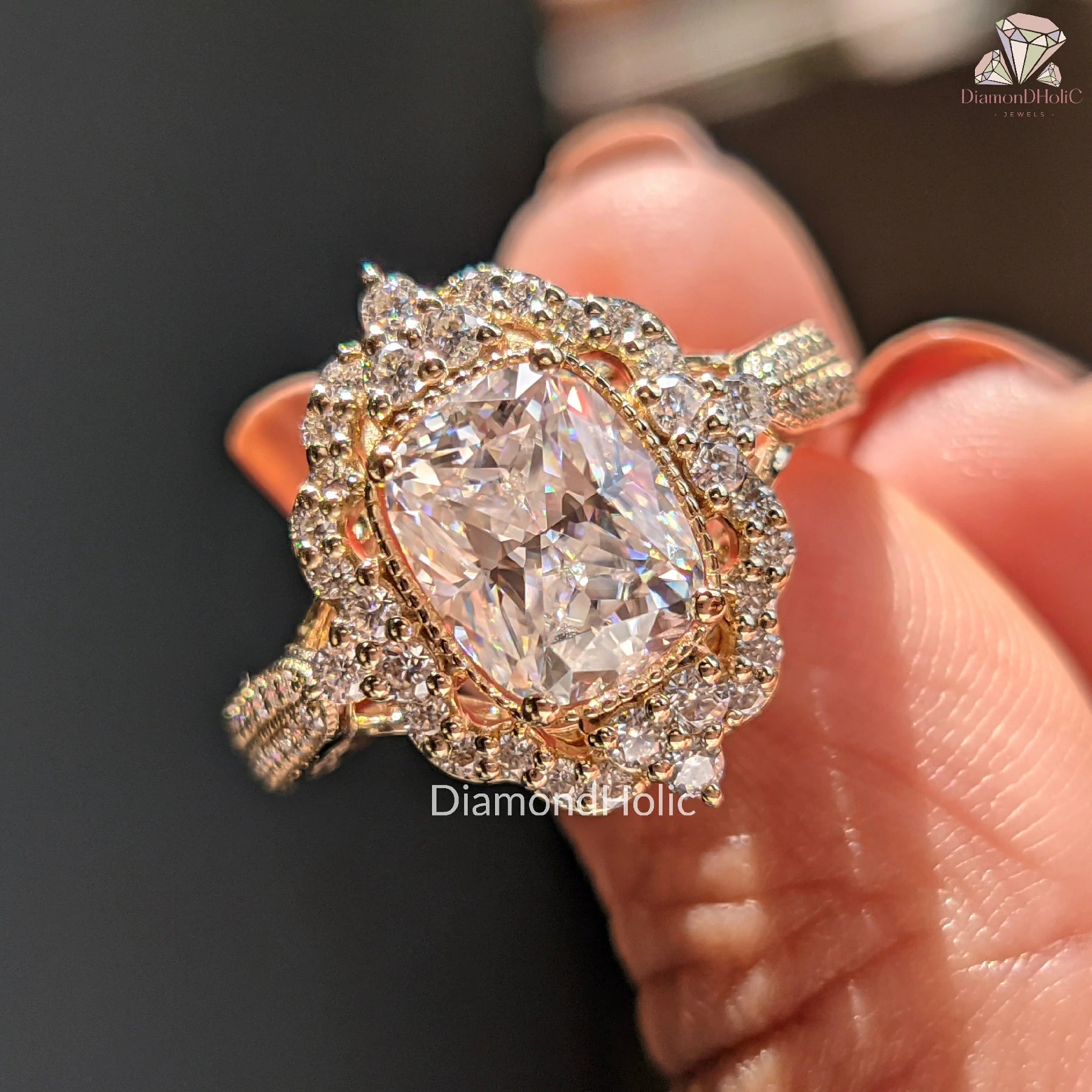
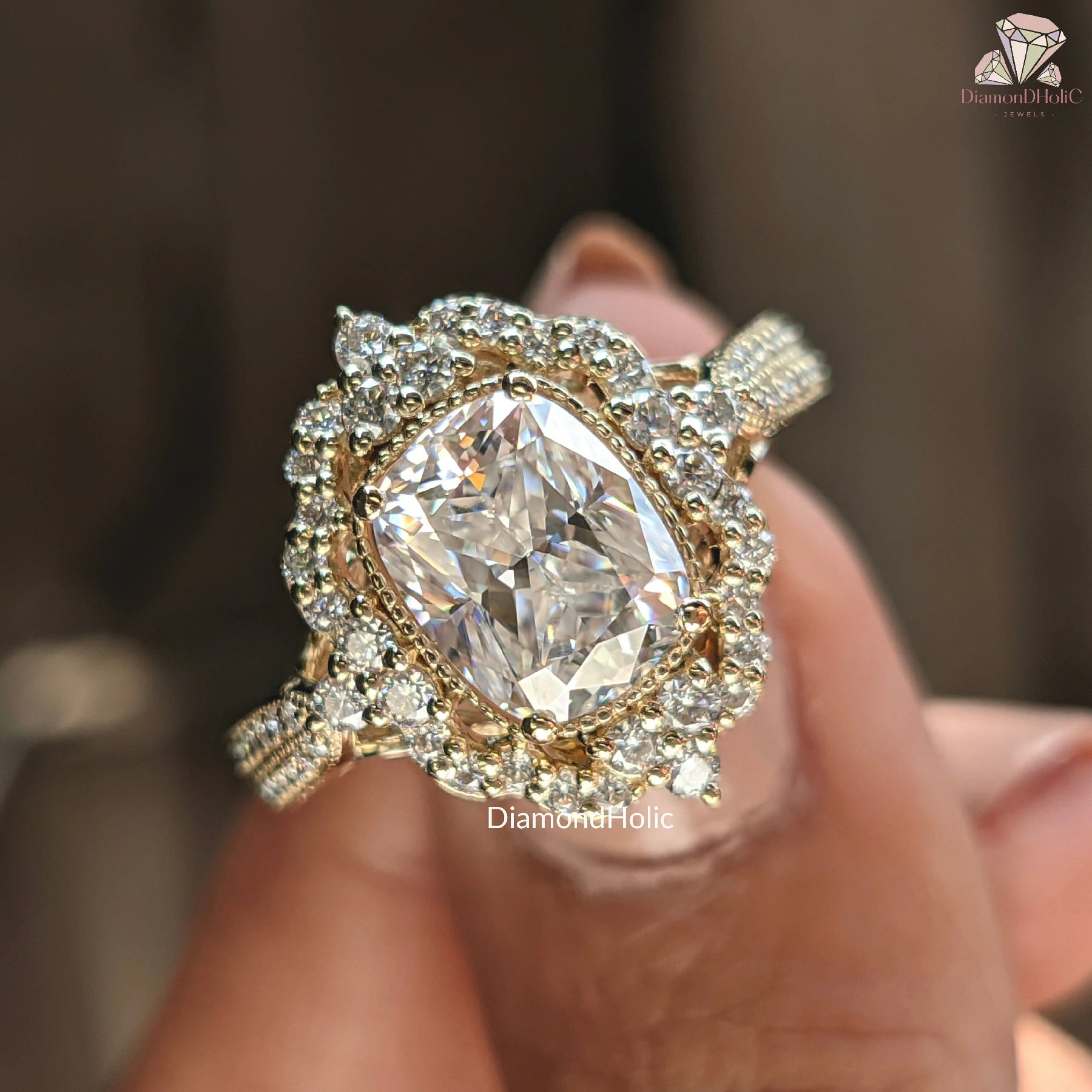
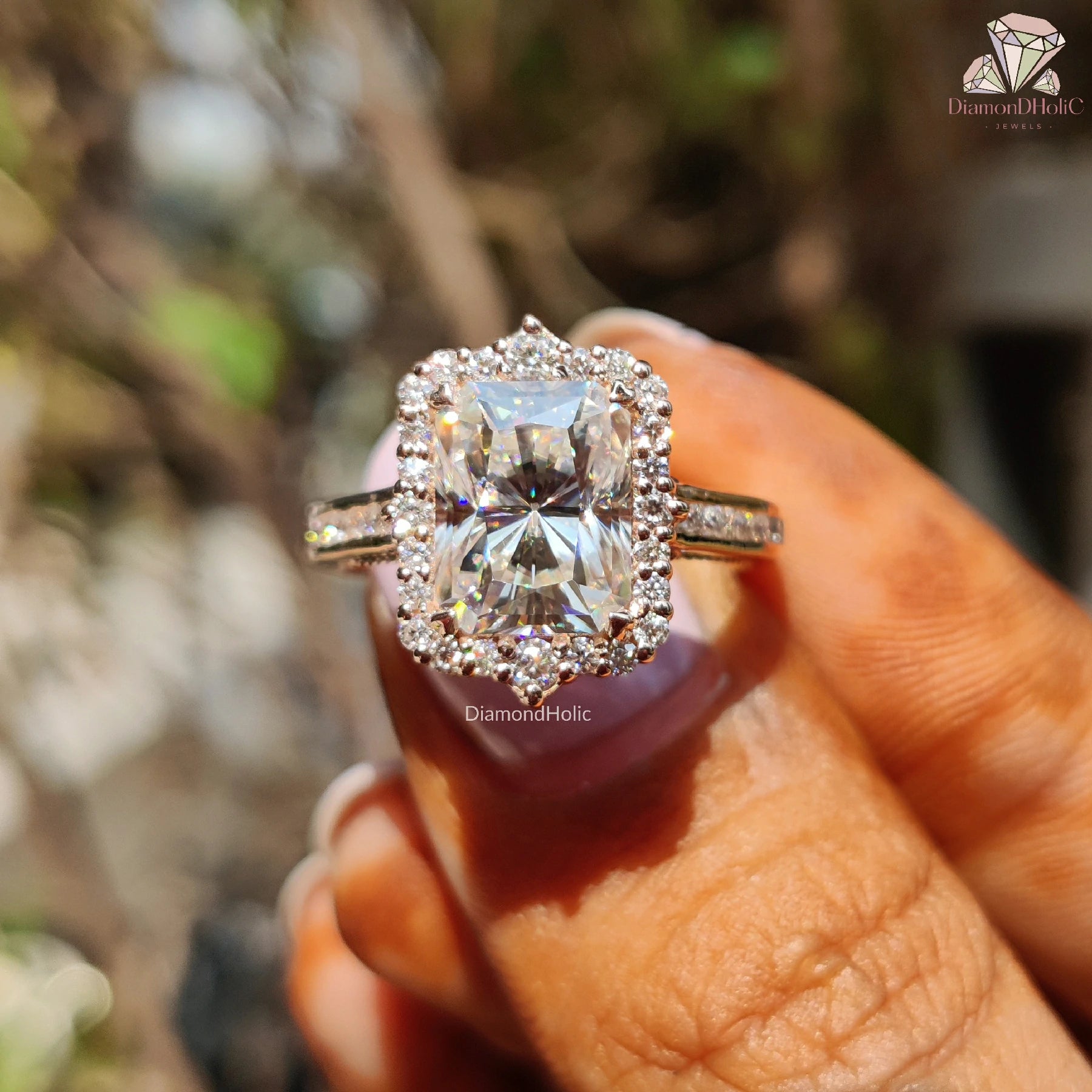
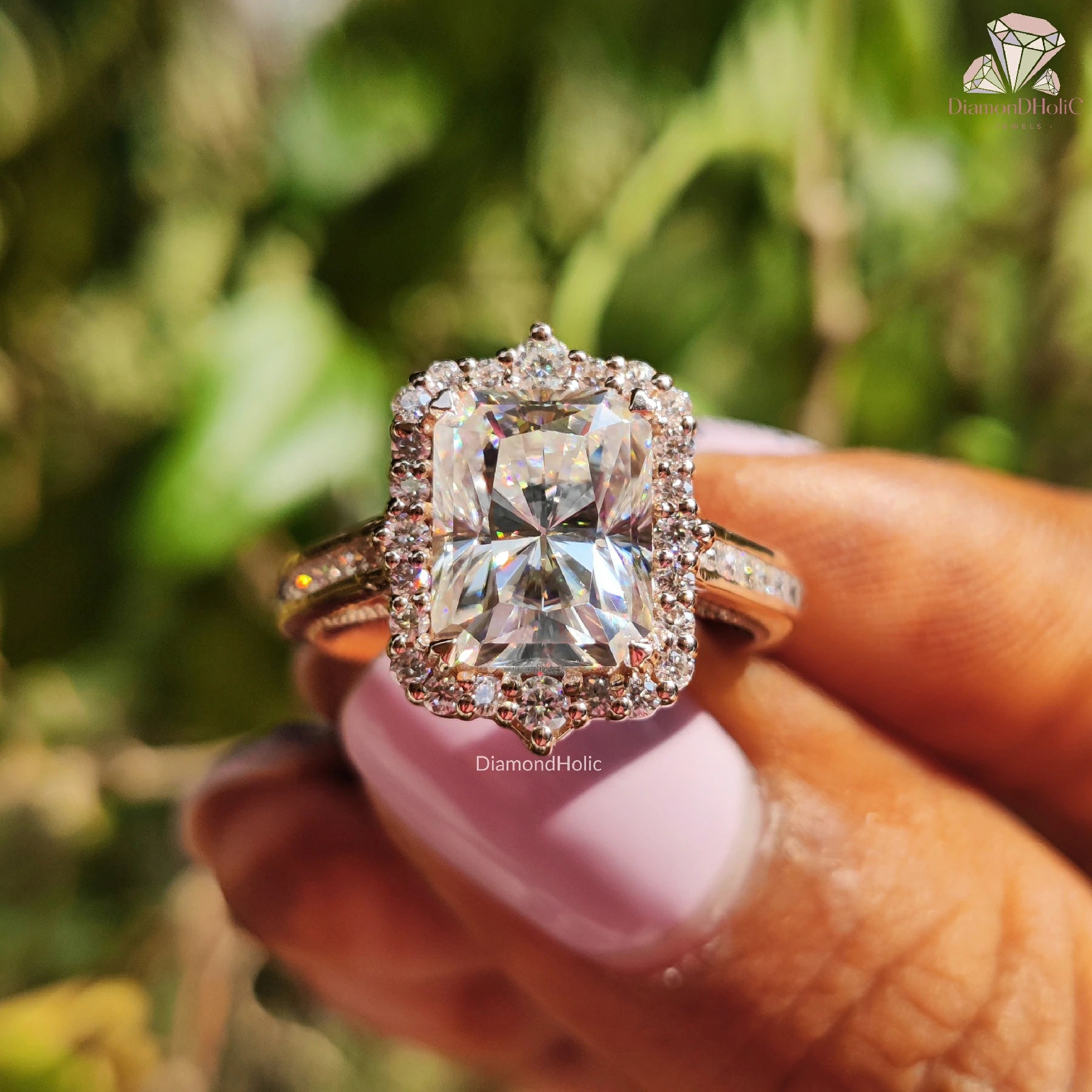
Rose gold moissanite wedding bands have a warmer pink-toned appearance. You may see options described as a rose gold moissanite band, moissanite rose gold wedding ring, or rose gold moissanite wedding band.
Platinum is another option for shoppers who prefer a naturally white precious metal and are comfortable with its higher material cost.
How Do You Match a Moissanite Band With an Engagement Ring?
Start with the actual engagement ring rather than choosing the wedding band by itself.
Check the center stone shape, setting height, band width, metal color, and spacing between the engagement ring and wedding band. A straight band may sit well with one engagement ring but leave a gap beside another.
For example, a low-set oval or round engagement ring may need a curved or contoured band to sit closely beside it. A higher setting may allow a straight moissanite band for engagement ring pairing.
What Should You Check Before Buying a Moissanite Wedding Band?
Before buying online, check:
-
Stone details: Ask about stone size, shape, quantity, and placement.
-
Metal: Confirm whether the ring is 10K, 14K, 18K gold, platinum, or another material.
-
Band width: Look for actual measurements rather than relying only on photos.
-
Ring size: Check the seller's sizing information before ordering.
-
Setting: Look at how the stones are held in place.
-
Full or half coverage: Make sure you understand where the stones are placed.
-
Product photos: Compare different views of the actual design.
-
Return terms: Read the return and exchange conditions before purchasing.
-
Shipping: Check estimated processing and delivery times.
-
Seller information: Look for clear contact details and customer service information.
How Do You Clean and Care for a Moissanite Band?
For basic cleaning, use warm water, mild soap, and a soft brush. Gently clean around the stones and setting, then rinse and dry the ring with a soft cloth.
Avoid harsh chemicals unless the jewelry manufacturer specifically confirms they are safe for your particular metal and setting.
If a stone moves, a prong looks damaged, or the ring has suffered a hard impact, stop wearing it until it can be inspected.
Who Should Consider a Moissanite Wedding Band?
Moissanite may suit couples who want a gemstone wedding band and are comparing different options beyond traditional diamonds. It can also work for shoppers who like the appearance and optical characteristics of moissanite and want a wide range of band styles.
Others may prefer natural diamond wedding bands because of the gemstone's material and market characteristics. Lab-grown diamond bands are another option for people who specifically want a diamond while comparing different price points.
Final Thoughts
Moissanite bands give couples another option when choosing wedding jewelry. From moissanite wedding bands for women and moissanite bands for women to full eternity, half eternity, baguette, pavé, and plain metal designs, there are many ways to build a ring combination.
Before buying, compare the gemstone, metal, measurements, setting, fit, price, and seller policies. Whether you choose moissanite, natural diamond, lab-grown diamond, or a simple metal band, the best decision is the one that fits your budget and how you plan to wear the ring. Pasted markdown
Frequently Asked Questions
Are Moissanite Bands Suitable for Everyday Wear?
Yes, moissanite is hard enough for regular wear. However, the ring still needs normal care, and the setting should be checked periodically for loose stones or damaged prongs.
Can a Moissanite Wedding Band Be Resized?
It depends on the metal, setting, and construction. A simple metal band may be easier to resize, while a full eternity band can be difficult because stones extend around the entire ring.
Are moissanite rings worth it?
Moissanite rings are worth it if you want high brilliance, great durability, and a lower upfront cost than mined diamonds.
How long will a moissanite ring last?
Moissanite rings can last a lifetime and even multiple generations because the stone itself is virtually indestructible and will never scratch, crack, or lose its sparkle.
Why is moissanite so expensive?
Moissanite is generally much cheaper than natural diamonds, though it can still feel pricey due to labour-intensive lab production, branding markups, and high-quality metal settings.
Does moissanite lose its sparkle over time?
No, moissanite does not permanently lose its shine or sparkle over time.


From $350.00 - $1,223.00
From $190.00 - $1,135.00
From $307.00 - $763.00


From $327.00 - $945.00


From $357.00 - $1,099.00


From $315.00 - $1,058.00


From $237.00 - $867.00


$918.00
$1,377.00


$918.00
$1,377.00


$918.00
$1,377.00
$989.00
$1,489.00


$330.00
$1,687.50


$409.00
$618.00


$2,197.44
$2,746.80


$317.23
$396.54
$2,197.44
$2,746.80


$317.23
$396.54


$282.83
$353.54
0 comments