


Introduction
Engagement ring styles change over time, but some designs stand out because they look different from the usual round, oval, or cushion center stone. Dutch Marquise engagement rings are one of those styles. Their elongated outline, pointed ends, and angular appearance give them a character that is quite different from a traditional marquise.
For couples looking for something less common, a Dutch marquise moissanite engagement rings offers an interesting middle ground between a classic marquise and more geometric diamond shapes. The style works particularly well with yellow gold, vintage-inspired settings, bezel designs, and custom ring layouts.
What Is a Dutch Marquise Engagement Ring?
A dutch marquise engagement rings features a diamond with an elongated outline and pointed ends, but the sides can be more straight and angular than those of a traditional marquise. Some jewelers describe the shape as an elongated hexagonal variation of the marquise, while others use the term for vintage-inspired marquise cuts with older-style faceting.
A dutch marquise engagement rings features a earlier variation of the marquise diamond cut, blending an elongated hexagonal silhouette with sharp, pointed tips and straighter, more geometric edges than a traditional curved marquise. It offers an architectural, vintage-inspired look that elongates the finger.
What Is the Difference Between Dutch Marquise and Marquise?
This is one of the most common questions from people shopping for marquise engagement rings.
A classic marquise cut diamond features smoothly curved, almond-like sides ending in sharp points, while a Dutch marquise swaps those curves for straight, angled edges to create an elongated hexagonal outline. Both share a long, finger-lengthening silhouette, but they differ significantly in style, structure, and classification.
In simple terms:
-
Classic Marquise: curved sides and pointed ends
-
Dutch Marquise: more angular or hexagonal-looking sides with pointed ends
-
Emerald Cut: rectangular or square outline with step-cut facets
-
Dutch Marquise Emerald Cut: a phrase sometimes used in product descriptions, but buyers should confirm exactly what facet arrangement and outline the seller means
Why Dutch Marquise Cuts Are Uncommon
Specialty Cutting: They feature an elongated hexagonal body with angular, straight or slightly bowed edges and distinct pointed tips, meaning higher stone loss risk during cutting.
Limited Inventory: You rarely find them in standard commercial jewelry store inventories; they are usually sourced via antique dealers, collectors, or custom designers.
Niche Demand: While gaining traction as a modern vintage-inspired trend, mainstream production volume remains low compared to mass-market cuts.
Why Are Dutch Marquise Engagement Rings Becoming Popular?
1. They Look Different From Common Engagement Ring Shapes
Round and oval diamonds remain popular choices, but many couples want a ring that does not look like every other engagement rings.
A unique marquise engagement ring can provide that difference without moving too far away from the popular pointed marquise shape. The Dutch variation adds more structure to the outline, making it appealing to people who like geometric jewelry.
2. The Elongated Shape Works Well on the Finger
The long outline of a marquise can create a visually elongated appearance on the hand. GIA notes that the marquise shape can make the diamond appear larger than its carat weight suggests and can make the finger appear longer.
For shoppers comparing a marquise diamond ring engagement design with an oval or pear, the Dutch Marquise can be worth considering when the goal is a longer center-stone outline.
3. It Works Very Well With Yellow Gold
A dutch marquise engagement ring yellow gold setting is particularly popular among buyers who like jewelry with a vintage or warm appearance.
A gold dutch marquise engagement ring can be paired with a plain band, pavé accents, side stones, a halo, or a bezel setting. Yellow gold also works well with vintage-inspired designs because it gives the ring a warmer overall appearance.
A gold engagement ring does not have to be complicated. A simple center stone with a clean yellow-gold band can create a strong design without adding unnecessary details.
4. It Fits Vintage-Inspired Jewelry
The connection between marquise diamonds and historical jewelry is well established. GIA notes that marquise diamonds were popular in Edwardian jewelry, while vintage diamond cutting also developed through changing techniques and styles during the 19th and early 20th centuries.
A vintage marquise engagement rings can include milgrain details, engraved shoulders, delicate side stones, yellow gold, or an antique-style setting. The Dutch Marquise shape adds another layer of visual interest without requiring an elaborate setting.
Popular Setting Styles
Solitaires: Keeps the focus entirely on the unique geometric lines of the center stone.
Hidden Halos: Adds a subtle layer of pavé sparkle beneath the gallery while maintaining a clean profile from the top down.
Three-Stone or Side Accents: Uses small round or pear-shaped diamonds to frame the elongated shape without competing with its outline.
Are Dutch Marquise Diamonds Rare?
Yes, Dutch marquise diamonds are very rare compared to standard cuts like round, oval, or traditional marquise shapes. They are produced in limited numbers, custom-cut by specialty makers, and typically show up on grading reports as an "elongated hexagonal modified brilliant" rather than under the commercial trade name.
The most useful point for a buyer is availability. Because fewer suppliers carry the shape, finding the exact combination of carat weight, color, clarity, measurements, and setting can require more searching.
Can You Buy a Lab Grown Dutch Marquise Engagement Ring?
Yes. A lab grown Dutch marquise engagement ring can be made when a suitable laboratory-grown diamond is cut into the desired Dutch Marquise shape.
Lab-grown diamonds have the same crystal structure and essentially the same chemical and physical properties as natural diamonds; the main distinction is their origin.
A lab grown marquise diamond ring can therefore be a practical option for buyers who want the marquise family of shapes while considering a laboratory-grown stone.
Specialty cuts can require more attention because the cutter needs to balance the desired outline with the available rough material and final proportions. The exact stone should be looked at individually rather than judged only by its name.
Is a Dutch Marquise Better Than a Traditional Marquise?
A marquise cut engagement ring may be the better choice for someone who prefers the familiar curved outline and traditional brilliant-style appearance. A Dutch Marquise may suit someone who prefers stronger geometric lines.
When comparing marquise diamond rings, focus on:
-
Overall outline and symmetry
-
Length-to-width ratio
-
Facet arrangement
-
Face-up appearance
-
Center-stone measurements
-
Color and clarity
-
Setting protection
-
Grading documentation where applicable
GIA notes that symmetry is particularly important for marquise-shaped diamonds because uneven sides or misaligned points can be noticeable. The pointed ends also need suitable protection because they can be vulnerable to damage.
What Ring Settings Work With a Dutch Marquise?
Dutch Marquise Bezel Ring
A dutch marquise bezel ring places metal around the outer edge of the stone. This can provide protection for the pointed ends and gives the ring a clean, structured appearance.
Solitaire Setting
A solitaire ring keeps attention on the center stone. It is a good option when the unusual outline is the main feature of the ring.
Three-Stone Setting
Side stones can be added to create a wider bridal design. Smaller marquise, pear, or tapered stones can complement the center stone depending on the desired proportions.
Vintage Setting
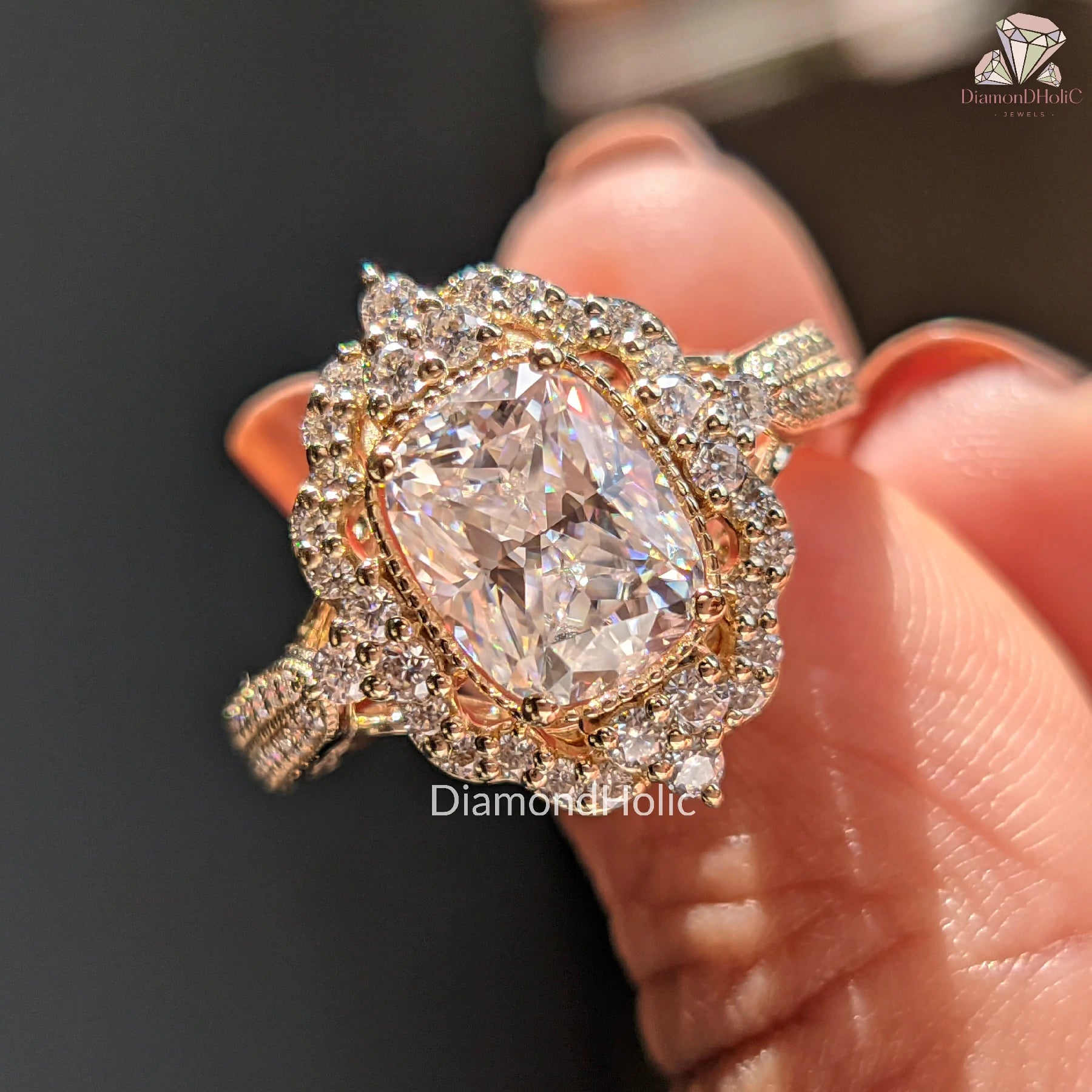
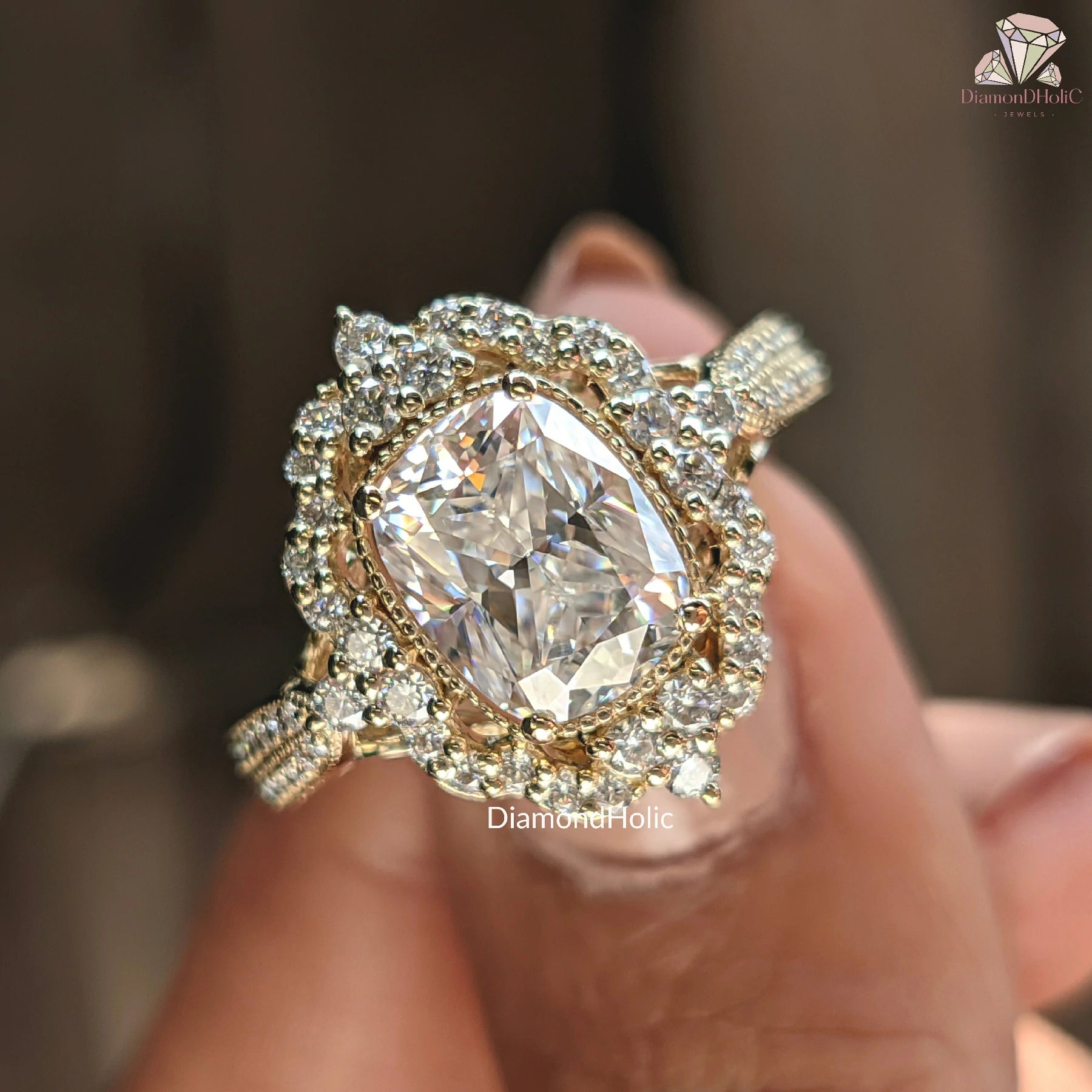
A vintage dutch marquise ring can include detailed shoulders, milgrain, small accent stones, and yellow gold.
Bridal Set
For couples who want designed to match wedding jewelry, marquise bridal set rings can pair a Dutch Marquise engagement ring with a matching or contour-shaped wedding band.
Can You Wear a Marquise Wedding Band With It?
A marquise wedding band can use marquise-shaped stones placed across the band, while a marquise diamond wedding band may feature repeated marquise diamonds in a shared design.
For a Dutch Marquise center stone, a straight band may leave a visible gap depending on the setting. A curved, contour, or custom-fitted band can create a closer fit.
If you are planning a complete dutch marquise wedding jewelry look, it is better to choose the engagement rings and wedding bands together rather than assuming every straight band will sit flush.
Why Is Marquise Cut Not Popular With Everyone?
The marquise shape has experienced periods of high and low demand. GIA notes that it was especially popular in the 1970s before becoming less fashionable as square-shaped princess cuts gained attention around the beginning of the 21st century.
One reason some buyers avoid the shape is that elongated diamonds can show a bow-tie effect, where a darker area appears across the center. GIA also emphasizes symmetry and careful assessment when choosing a marquise.
Is a Dutch Marquise Engagement Ring a Good Choice?
A dutch marquise makes sense if you want an engagement ring that combines the elongated profile of a marquise with stronger geometric lines. It can work especially well with yellow gold, vintage settings, bezel designs, solitaire arrangements, and custom jewelry.
If you prefer a classic silhouette, a traditional marquise diamond engagement ring may be more suitable. If you want something less common, a dutch marquise diamond engagement ring is worth considering.
Final Thoughts
The growing interest in dutch marquise engagement rings comes down to the shape. It is elongated like a marquise but can have a more angular outline that appeals to people who prefer geometric jewelry.
Whether you choose a dutch marquise ring, dutch marquise diamond ring, lab grown dutch marquise engagement ring, or dutch marquise engagement ring yellow gold, the most important step is to judge the actual diamond and setting.
Look at the measurements, symmetry, facet arrangement, stone documentation, setting construction, and how the ring sits on the finger. A well-made ring should suit the wearer first, while the Dutch Marquise shape provides the distinctive detail that makes the design different from standard marquise engagement rings.
FAQs:-
Q. 1 Are Dutch marquise rare?
Yes, Dutch marquise diamonds (also called elongated hexagons or Rupee cuts) are considered quite rare compared to traditional shapes like rounds, ovals, or standard marquise cuts.
Q. 2 What is a Dutch marquise engagement ring?
A Dutch marquise engagement ring features a unique, geometric twist on the classic boat-shaped marquise diamond.
Q. 3 Why is Marquise cut not popular?
The marquise cut is often less popular than mainstream shapes like round or oval because its sharp, pointed tips are prone to chipping and snagging on clothing.
Q. 4 Are Dutch marquise diamonds real?
Yes, Dutch marquise diamonds are real diamonds. The term refers to a real, distinct diamond cut that blends the pointed tips of a traditional marquise with straight, geometric, angled sides that form an elongated hexagon. They are available as both natural (mined) and lab-grown stones.
Q. 5 Is a marquise diamond more expensive?
No, a marquise diamond is not more expensive. It is usually 20% to 30% less expensive than a round brilliant diamond of the same carat weight and quality grade.
Q. 6 What are the pros of a Dutch marquise?
The Dutch Marquise diamond features straight, beveled edges and an elongated shape. It offers a unique alternative to a traditional curved marquise, combining antique European charm with an architectural, geometric look.
Q. 7 Can Dutch marquise be natural?
Yes, a Dutch marquise diamond can be natural. While the geometric, modified hexagonal cut is uncommon and often custom-cut or lab-grown, jewelers can shape natural earth-mined diamonds into this vintage-inspired silhouette.
Q. 8 What does a marquise diamond say about a person?
A marquise diamond suggests a bold, confident, and dramatic personality. People who wear this historic, football-shaped cut often love glamour, enjoy standing out from the crowd.
Q. 9 Can you get a Dutch marquise diamond?
Yes, you can get a Dutch marquise diamond. It is a rare, vintage-inspired variation of the classic marquise cut that features an elongated hexagonal silhouette with straight, angular sides and pointed tips.


From $350.00 - $1,223.00
From $190.00 - $1,135.00
From $307.00 - $763.00


From $327.00 - $945.00


From $357.00 - $1,099.00


From $315.00 - $1,058.00


From $2,587.43 - $3,077.00


$799.00
$1,150.00


$799.00
$1,150.00


$799.00
$1,150.00
$949.00
$1,250.00


$330.00
$1,687.50


$480.00
$2,558.75


$2,197.44
$2,746.80


$317.23
$396.54
$2,197.44
$2,746.80


$282.83
$353.54
0 comments