

Introduction
Moissanite has become a popular choice in modern jewelry, mostly for people looking for an alternative to traditional gemstones. If you are new to this topic, understanding what moissanite is, how it compares to other stones, and why people choose it can help you make a better decision.
What Is Moissanite?
Moissanite is a gemstone made from silicon carbide. It was first identified in a meteor crater, which makes its origin unique. Natural moissanite is extremely rare, so the stones used in jewelry today are created in laboratories.
Even though it is lab-created, moissanite is a real gemstone with strong physical properties. It is not plastic or glass. It is designed to have durability and clarity similar to other high-quality gemstones.
History of Moissanite
Moissanite was first discovered in 1893 by a scientist named Henri Moissan. He initially thought the crystals he found were diamonds, but later research showed they were made of silicon carbide.
Because natural moissanite is rare, scientists developed a way to create it in labs. Over time, it became widely used in jewelry due to its strength and appearance.
How Moissanite Is Made
Modern Moissanite Rings are produced in controlled lab environments using advanced technology. The process involves growing silicon carbide crystals under high temperature and pressure.
This method ensures:
-
Consistent quality
-
High clarity
-
Fewer imperfections
Lab creation also makes moissanite more accessible compared to rare natural gemstones.
Key Properties of Moissanite
Understanding the properties of moissanite helps explain why it is widely used in jewelry.
1. Hardness
Moissanite ranks 9.25 on the Mohs hardness scale. This makes it one of the hardest gemstones, suitable for daily wear.
It is resistant to scratches, chips, and breaking. This makes it a practical choice for rings and bracelets.
3. Clarity
Most moissanite stones have very few visible inclusions, meaning they appear clean to the eye.
Moissanite reflects light strongly, which gives it a bright appearance under different lighting conditions.
Moissanite vs Diamond: What’s the Difference?

Many beginners compare moissanite with diamonds because they look similar at first glance. However, there are important differences.
1. Composition
-
Moissanite: Silicon carbide
-
Diamond: Carbon
2. Price
Moissanite is generally more affordable than diamonds of similar size and quality.
3. Appearance
Moissanite reflects light differently, sometimes showing more colorful flashes under strong light.
4. Hardness
Diamonds rank 10 on the Mohs scale, slightly higher than moissanite, but both are durable enough for daily use.
Why People Choose Moissanite
There are several reasons why moissanite is gaining popularity.
1. Budget-Friendly Option
Moissanite allows buyers to choose larger stones at a lower cost compared to diamonds.
2. Ethical Production
Since moissanite is lab-created, it avoids issues related to mining and sourcing.
3. Low Maintenance
It does not require special care and can be cleaned easily at home.
4. Suitable for Daily Wear
Its strength and durability make it ideal for everyday jewelry like engagement rings.
Is Moissanite Real or Fake?
This is one of the most common questions beginners ask. Moissanite is a real gemstone, but it is not a diamond. It is made from a different material and has its own identity. Calling it “fake” is incorrect, as it has genuine physical and chemical properties.
Types of Moissanite Available
Moissanite stones come in different qualities and styles.
1. Color Grades
-
Colorless
-
Near colorless
-
Slightly tinted
Higher-grade stones appear clearer and more neutral in color.
2. Shapes and Cuts
Moissanite is available in many shapes, such as:
-
Round
-
Oval
-
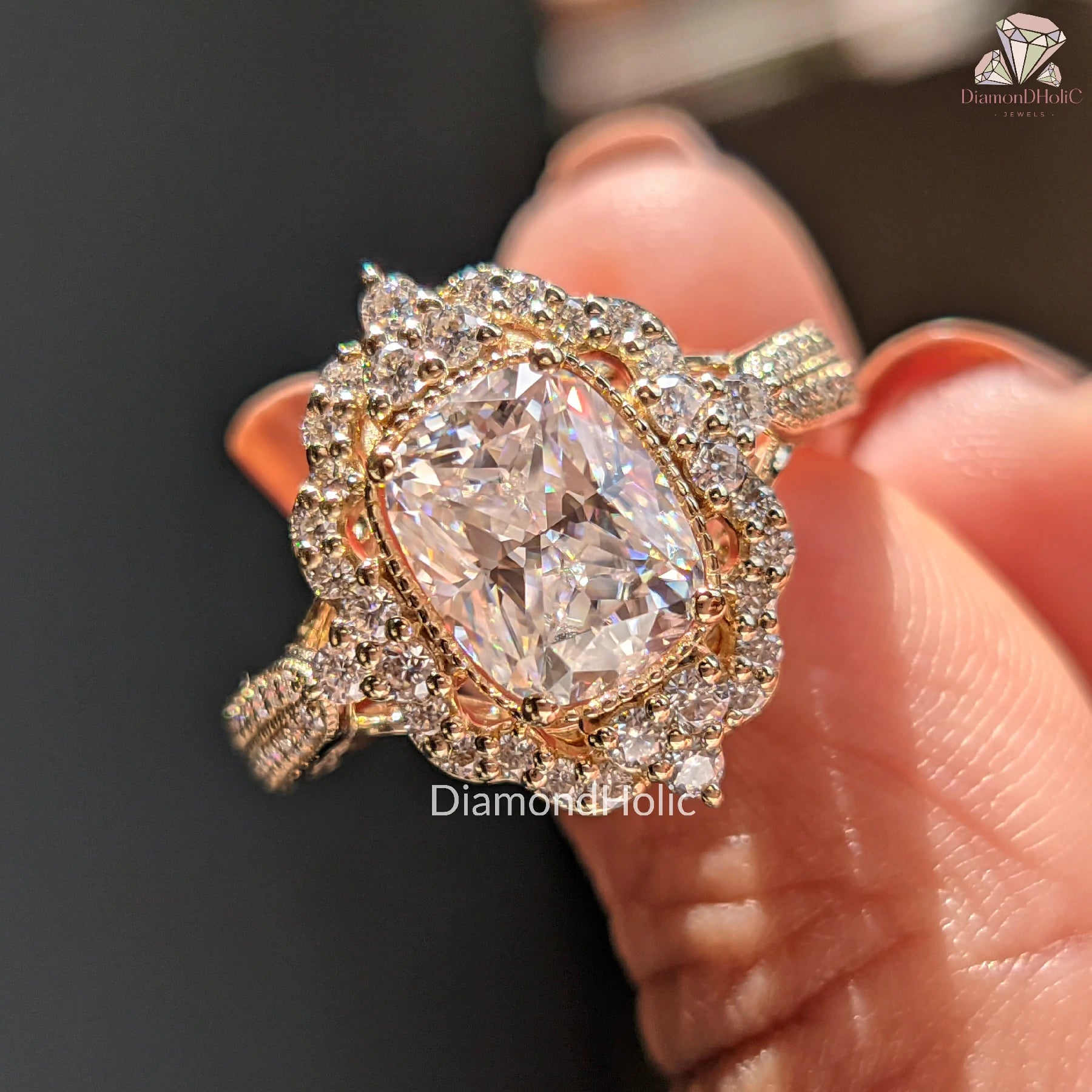
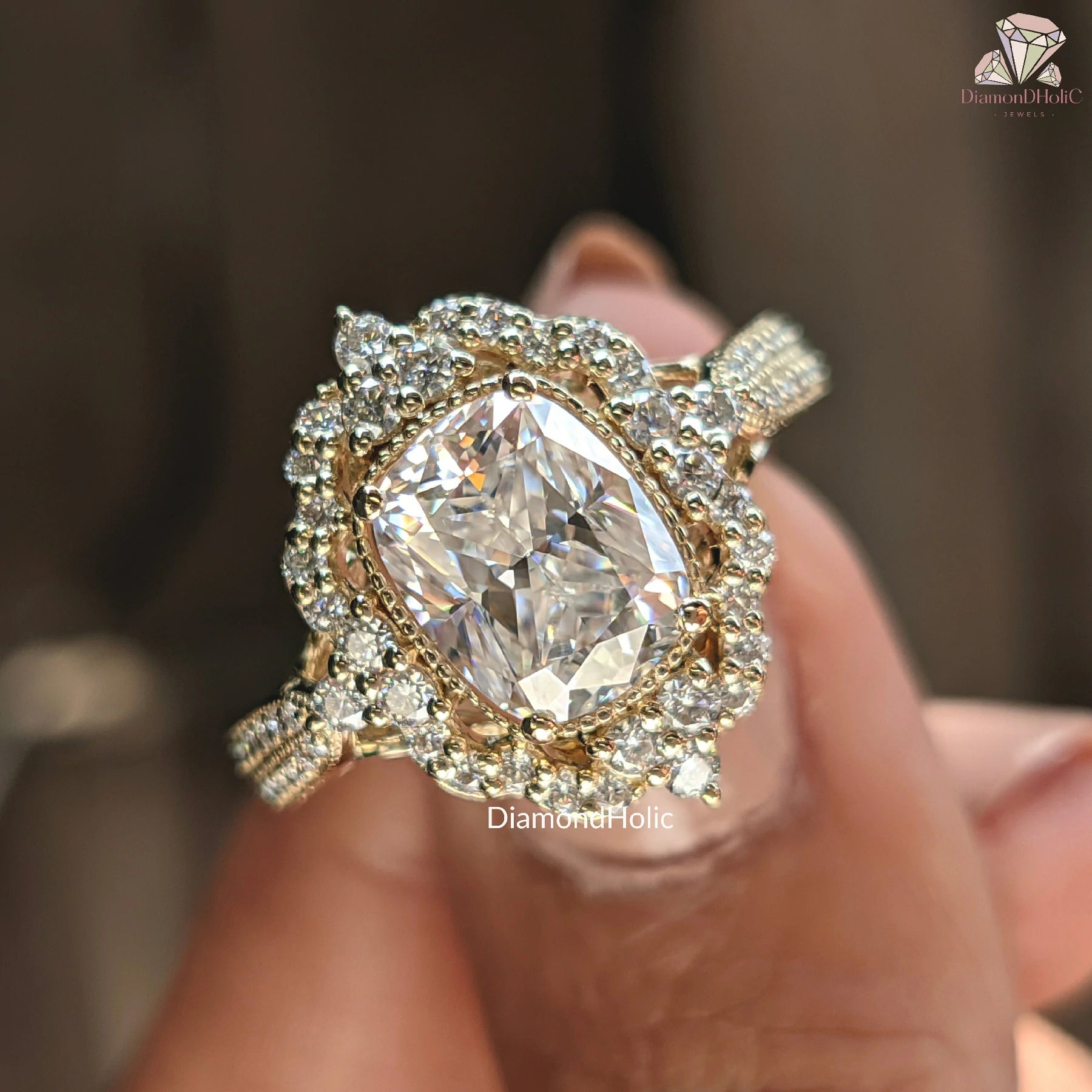
Cushion
-
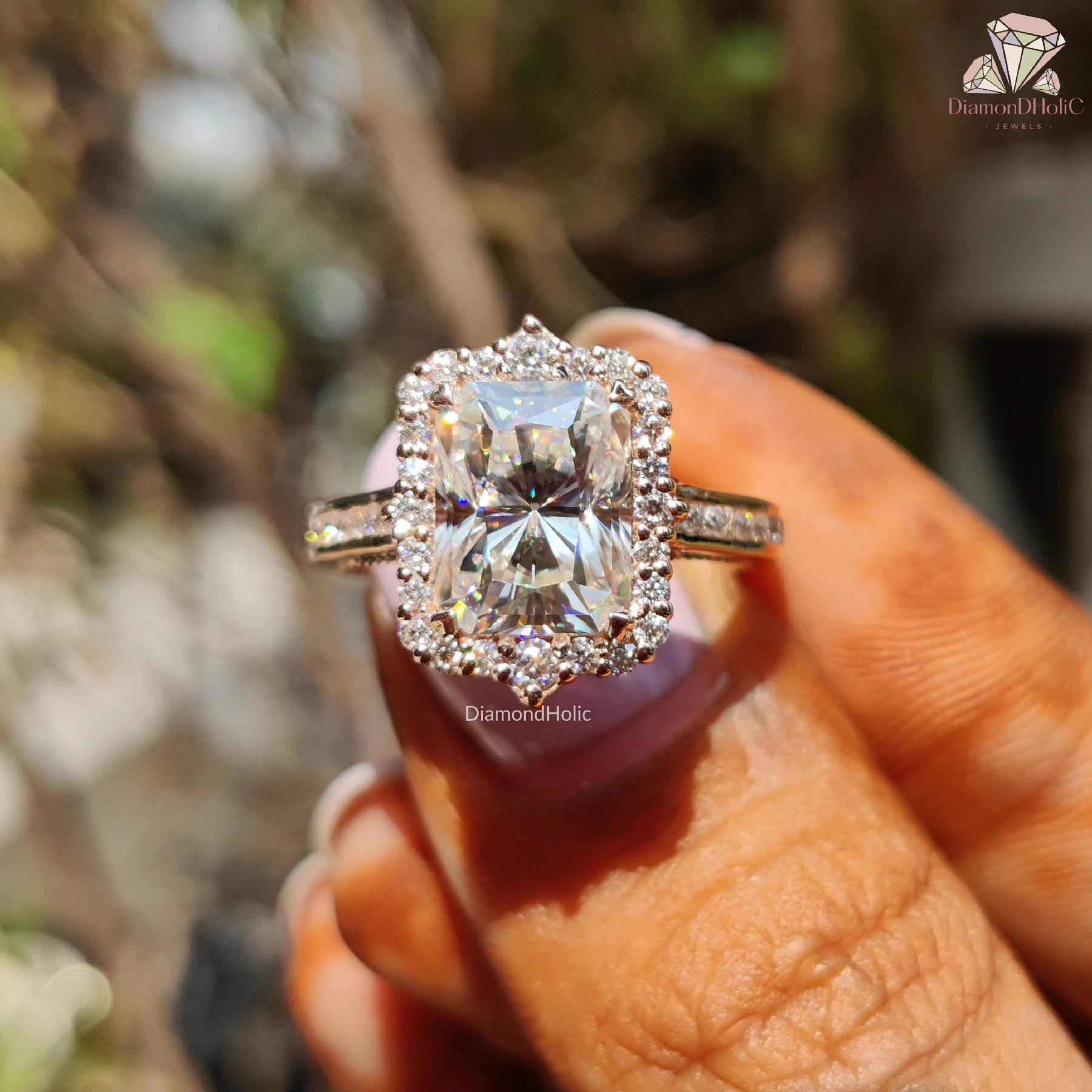
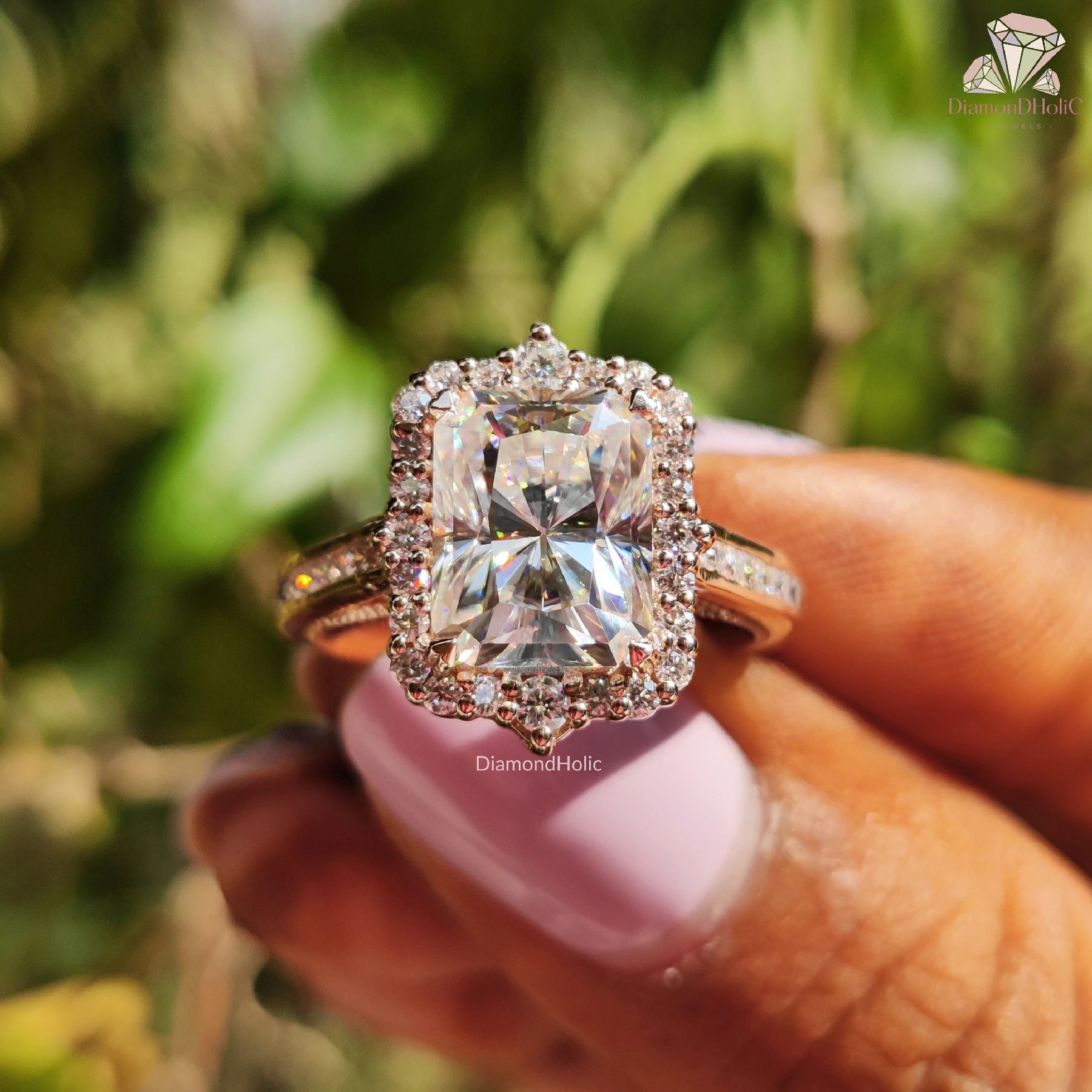
Emerald
Each cut affects how light interacts with the stone.
3. Size Options
Moissanite is available in various sizes, making it easy to find options for different budgets and preferences.
How to Care for Moissanite Jewelry
Taking care of moissanite is simple, which makes it beginner-friendly.
Basic Care Tips:
-
Clean regularly with mild soap and warm water
-
Use a soft brush to remove dirt
-
Avoid harsh chemicals
-
Store separately to prevent scratches
With regular care, moissanite can maintain its appearance for a long time.
Common Myths About Moissanite
There are several misunderstandings about moissanite. Let’s clear them up.
Myth 1: It Looks Exactly Like Diamond
While similar, moissanite has its own light reflection pattern.
Myth 2: It Is Not Durable
Moissanite is one of the hardest gemstones and is suitable for daily wear.
Myth 3: It Has No Value
Moissanite holds value as a gemstone, especially due to its quality and durability.
Is Moissanite Right for You?
Choosing moissanite depends on your needs and preferences.
It may be a good option if you:
-
Want a durable gemstone
-
Prefer a lower-cost alternative
-
Like low-maintenance jewelry
-
Are you comfortable with lab-created stones
Final Thoughts
Moissanite is a strong and practical gemstone that works well for modern jewelry. It offers durability, clarity, and affordability, making it a good option for beginners who are exploring different gemstone choices.
FAQs:-
1. Which finger is best for moissanite?
Ring Finger Options
Left 4th Finger (Traditional Choice) Best for: Engagement & Wedding Rings.
Right 4th Finger (Modern Alternative) Best for: Fashion or Statement Rings.
Thumb Rings. Best for: Bold & Adjustable Designs.
Middle & Index Fingers. Best for: Cluster or Geometric Moissanite Rings.
2. Can I sell my moissanite diamond?
Yes, you can resell moissanite, but it typically holds a lower resale value than diamonds, often fetching only 20–50% of its original purchase price.
3. What is the rarest color of moissanite?
The rarest shade in both moissanite and lab diamond is cornflower blue. There's exceptional value to be found with fancy color moissanite, and these pieces are no exception, priced at $3,620 and $3,160 with our 20% off sample sale!
4. Can you wash your hands with moissanite?
Moissanite won't be harmed, but repeated exposure to hand sanitiser can affect the metal band. Rinse your ring occasionally to prevent buildup.
5. Do celebrities wear moissanite?
Yes, celebrities wear moissanite, often choosing it for its high brilliance, ethical and sustainable lab-grown nature, and affordability compared to diamonds.


From $350.00 - $1,223.00
From $190.00 - $1,135.00
From $307.00 - $763.00


From $327.00 - $945.00


From $315.00 - $1,058.00


From $305.00 - $978.00
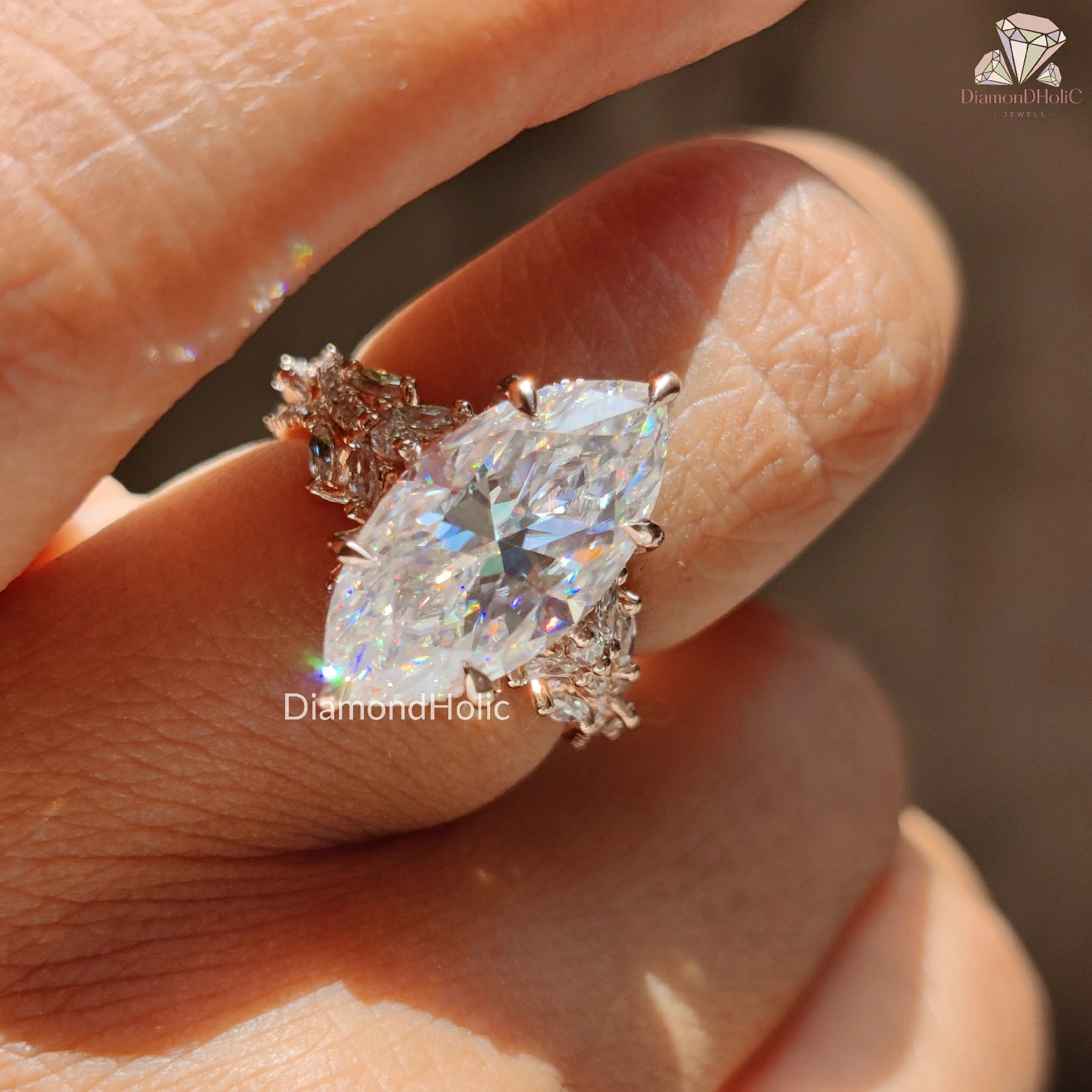
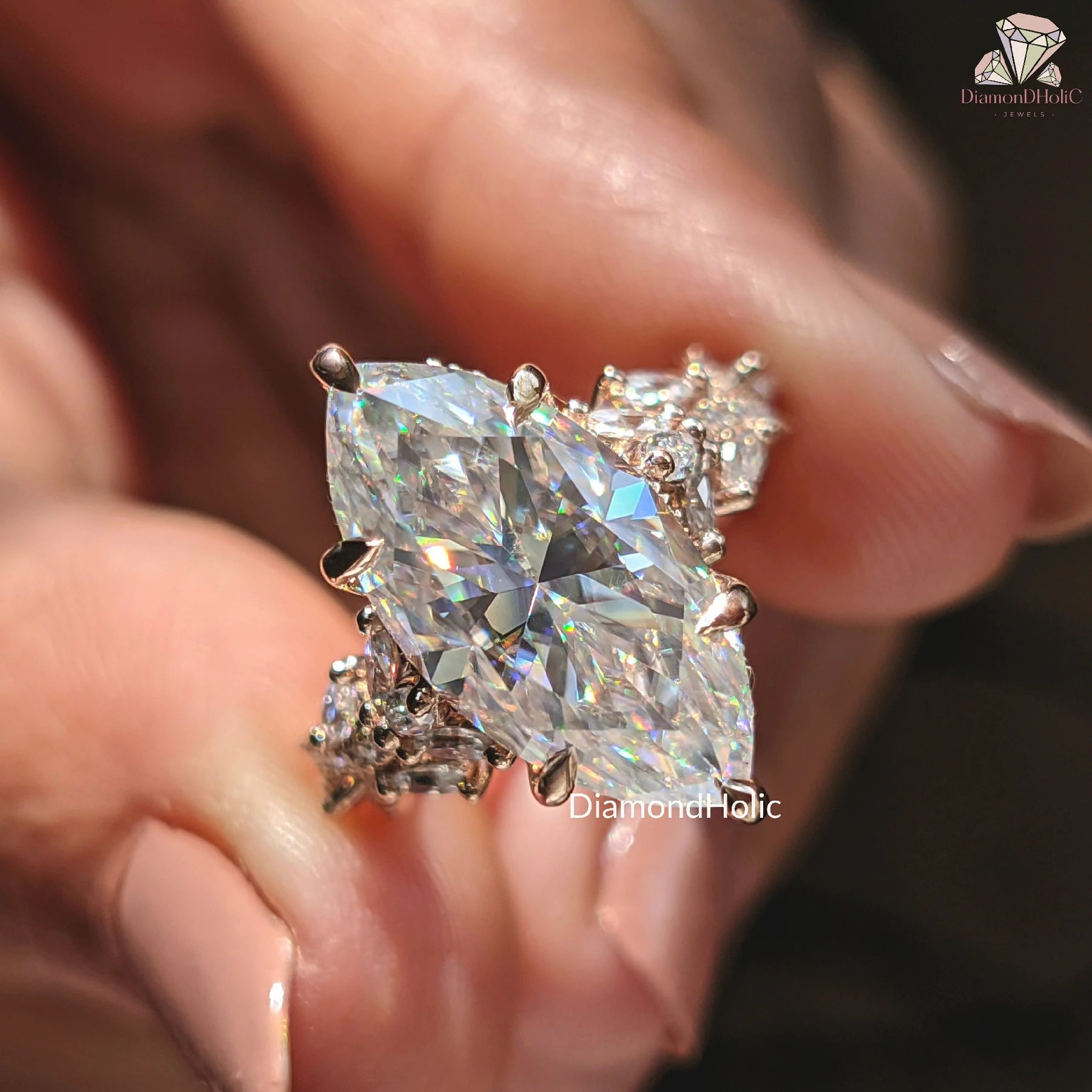
From $364.00 - $899.00


$799.00
$1,150.00


$799.00
$1,150.00


$799.00
$1,150.00
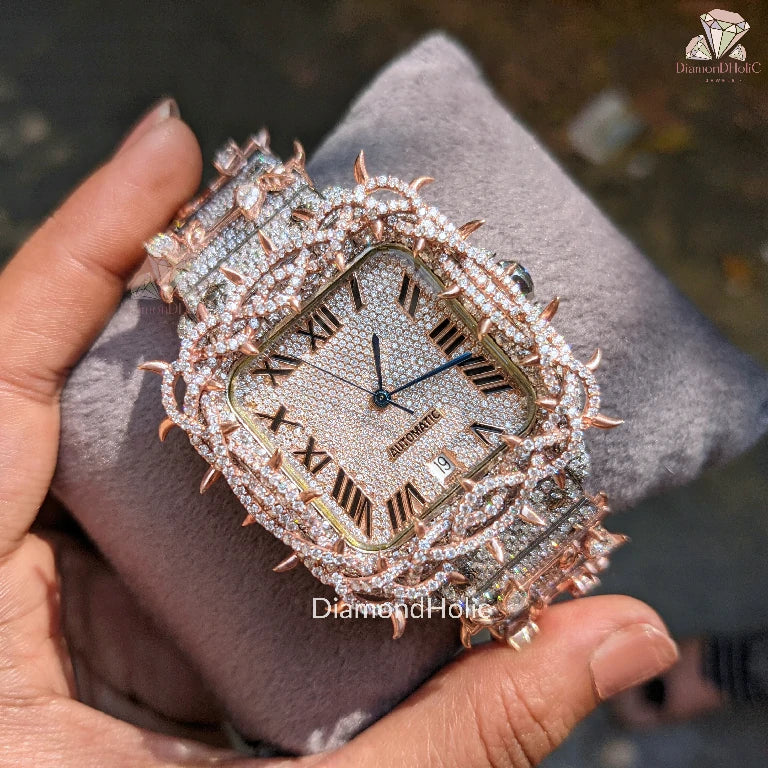
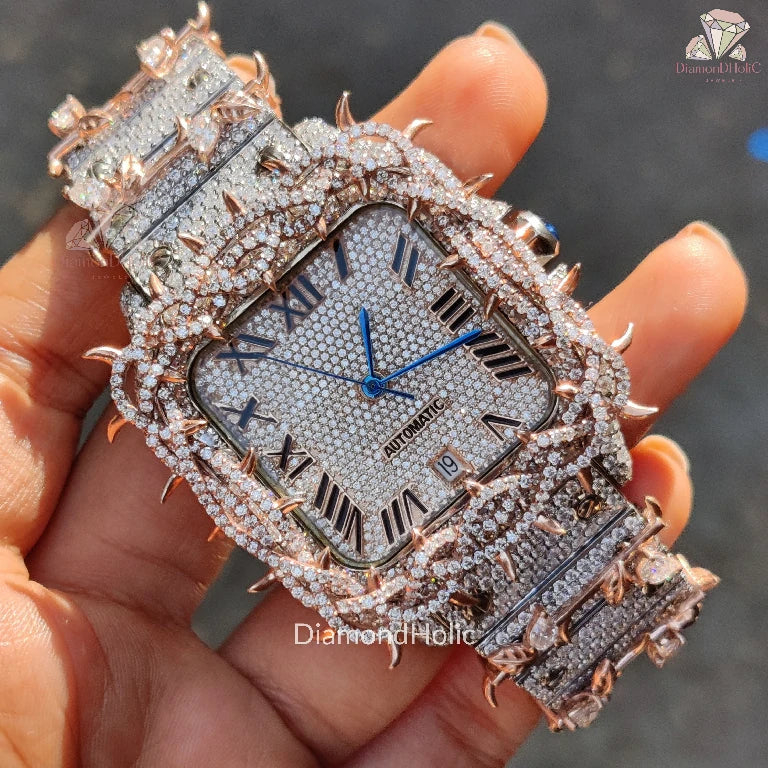
$949.00
$1,250.00


$330.00
$1,687.50


$480.00
$2,558.75


$2,197.44
$2,746.80


$317.23
$396.54
$2,197.44
$2,746.80


$282.83
$353.54
0 comments